The Southeast's Next Decade Is Taking Shape
Ben Simpson
May 1, 2026
I've spent more than three decades working in the residential development industry across Australia and the United States, including nearly a decade living and working throughout the Southeast. During that time, I've seen the industry navigate the aftermath of the Global Financial Crisis, respond to a pandemic, absorb interest rate shocks, and continually adapt to changing buyer expectations.
What feels different about 2026 is that several powerful trends are no longer operating independently—they are reinforcing one another. Population growth is driving housing demand, supply shortages are becoming increasingly structural, wellness is moving into the mainstream, climate resilience is influencing location decisions, and long-term investment in quality communities is once again being rewarded. Together, these forces are creating a very different environment from anything we've experienced in recent years.
Importantly, this isn't a new story. It is the continuation of a demographic shift that has been reshaping America since World War II. More than 70% of the nation's population growth has occurred across the Sunbelt states, with a significant share concentrated throughout the Southeast. Today, many of America's fastest-growing counties remain located within this corridor, reinforcing a migration trend that has been building for decades rather than years.
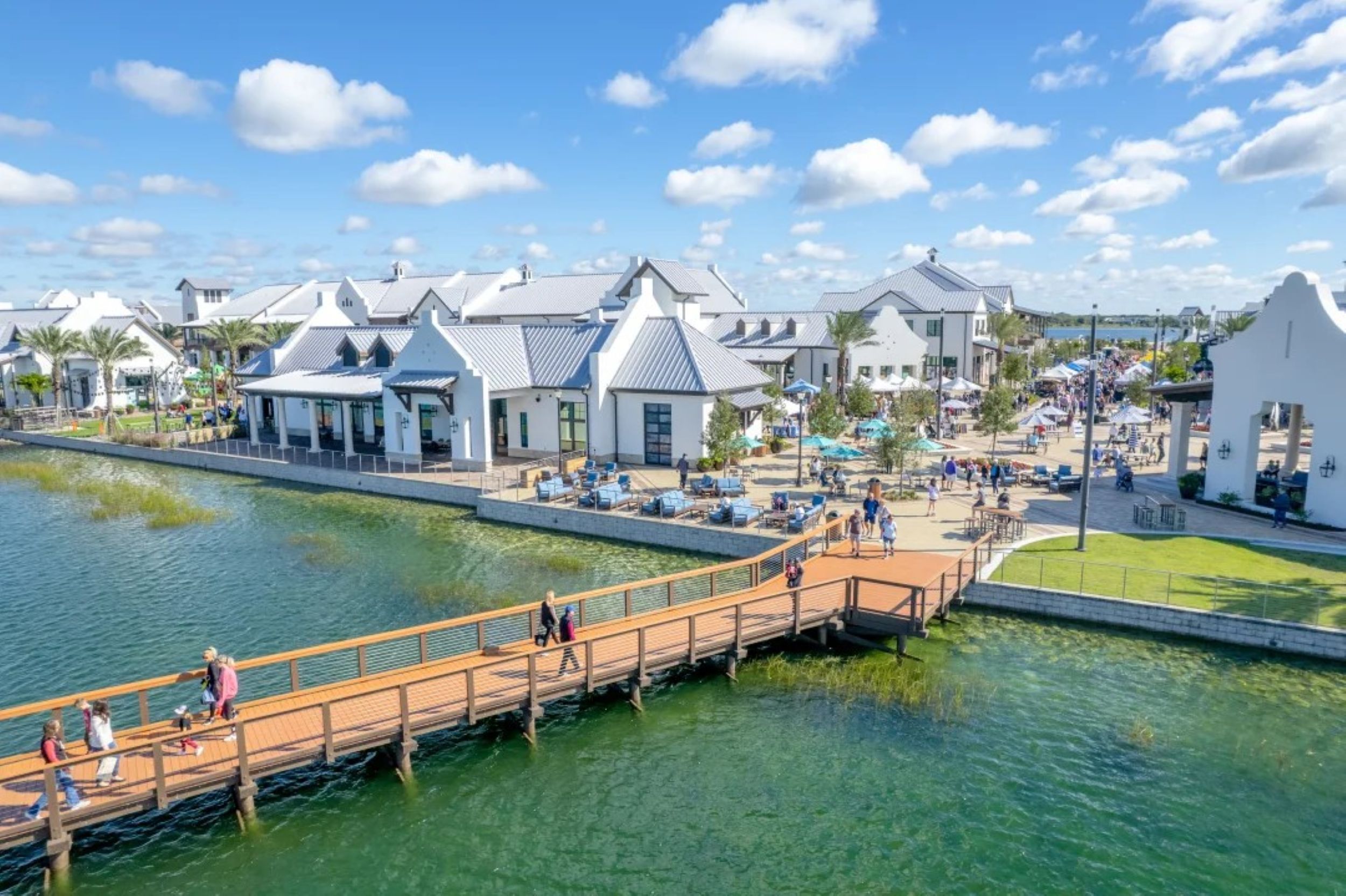
The success of communities such as Lakewood Ranch in Florida, shown above, illustrates this evolution. What began as a master-planned community has grown into one of the most successful and sought-after communities in the United States, demonstrating how long-term vision, investment, placemaking, wellness, and economic opportunity can combine to create enduring value for both residents and investors.
Migration Has Become Structural
For much of the past decade, population growth across the Southeast was often dismissed as cyclical or pandemic-driven. That argument is becoming increasingly difficult to sustain. Recent Census Bureau data continues to show many of America's fastest-growing counties concentrated throughout Florida, Georgia, South Carolina, North Carolina, and Virginia. North Carolina alone attracted more than 139,000 net new residents in 2024, making it one of the strongest-performing states in the country.
The rise of remote and hybrid work has fundamentally changed how people think about where they live. Approximately one-quarter of all paid workdays are now performed from home, while nearly one-third of homebuyers are searching for homes outside their existing metropolitan area. Increasingly, people are not simply moving for employment opportunities, they are moving for lifestyle, affordability, flexibility, and quality of life.
The Southeast is no longer benefiting from a temporary migration surge. It is benefiting from a long-term redistribution of population and economic activity.
Growth Is Moving Beyond The Major Metros
One of the most significant shifts occurring across the region is where growth is taking place. While major metropolitan areas continue to attract investment and population, many of the fastest-growing locations are now found on the outer edges of those markets.
Counties such as Jasper County, South Carolina, Jackson County, Georgia, and numerous communities throughout Texas and Florida are attracting residents seeking more space, greater affordability, and stronger connections to nature without sacrificing access to employment and services.
This trend reinforces a lesson many developers are beginning to recognise:
People don't simply want houses. They want places.
The communities best positioned for long-term success are those capable of offering both economic opportunity and quality of life. Increasingly, that combination is being found in thoughtfully planned communities located beyond the traditional urban core.
The Housing Deficit Is Becoming Generational
Although inventory levels have improved in some markets, the underlying housing shortage remains profound. America continues to face an estimated deficit of approximately 7.1 million affordable homes and rental units. At the same time, first-home buyers now account for only 24 percent of housing purchases, compared with approximately 50 percent in 2010. Meanwhile, demographic changes are expected to drive demand for hundreds of thousands of additional senior housing units over the coming decade.
These are not short-term imbalances that can be resolved through a single market cycle. They reflect long-term structural challenges that will require sustained housing delivery over many years.
This is not a cyclical opportunity. It is a generational one.
That's why I spend far less time worrying about short-term interest rate movements and far more time focusing on long-term demand fundamentals. The need for housing is not disappearing anytime soon.
Wellness Has Become a Core Design Principle
Perhaps the most significant shift I have observed over the past decade is the evolution of buyer expectations. Wellness was once viewed as a niche concept, often confined to marketing campaigns and lifestyle branding. Today, it is increasingly becoming a fundamental design consideration.
People are actively seeking communities that support physical activity, social connection, mental wellbeing, and healthier lifestyles. Walkable streets, trail networks, parks, open spaces, community gathering areas, and convenient access to schools and services are no longer viewed as optional extras. They are becoming baseline expectations.
Industry research indicates that approximately nine out of ten master-planned communities now actively promote health and wellness initiatives. This reflects a broader market shift away from simply providing amenities and toward creating environments that support how people want to live.
The conversation has moved beyond amenities. Buyers are increasingly looking for communities designed to help them thrive.
Climate Resilience Is Influencing Location Decisions
Another trend that deserves greater attention is the growing importance of climate resilience in residential decision-making. For the first time in recent years, some high-risk flood markets are experiencing measurable domestic population outflows as buyers place greater emphasis on long-term environmental risks.
Issues such as flood exposure, insurance costs, infrastructure resilience, water security, and environmental sustainability are becoming increasingly important considerations for both residents and investors.
Climate resilience is no longer simply an engineering challenge or a regulatory requirement. It is becoming a market differentiator.
Developers who proactively address resilience through site selection, infrastructure planning, and long-term stewardship will increasingly create competitive advantages for their communities.
Long-Term Community Development Is Being Rewarded
Many of the country's strongest-performing master-planned communities are built around multi-decade investment horizons that integrate housing, employment, retail, recreation, education, and open space into a cohesive vision. Communities such as Lakewood Ranch, Florida have demonstrated that when development is approached as place creation rather than simply lot delivery, the results can be transformational.
The vibrant town centre, waterfront gathering spaces, walkable streets, parks, trails, events, and community programming visible throughout Lakewood Ranch have helped create a destination that attracts residents, employers, and investment alike. Its success reinforces a lesson that is increasingly relevant across the Southeast: people are not simply purchasing a home—they are buying into a lifestyle, a community, and a sense of belonging.
These projects are proving remarkably resilient despite mortgage rate volatility, affordability challenges, election uncertainty, and broader economic headwinds. What makes them successful is not simply the number of homes they deliver. It is their ability to create places that remain relevant and desirable over time.
Communities designed for long-term thriving consistently outperform those designed for short-term delivery.
What I'm Watching Next
The Southeast isn't simply growing.
It is maturing.
Migration patterns are becoming structural rather than cyclical. Housing shortages are proving deeper and more persistent than many anticipated. Wellness has moved from a niche concept to a mainstream expectation. Climate resilience is influencing where people choose to live. And long-term community investment is once again being recognised as a competitive advantage.
Individually, each of these trends is important. Together, they are reshaping the future of residential development across the region.
The communities that succeed over the next decade will not simply deliver homes. They will create places that balance affordability, economic opportunity, resilience, wellbeing, and long-term value creation.
The Southeast is not just where people are moving. It is where the next generation of great communities is being built.
Related posts
More ideas, stories and innovations from the team at Placewell.
Get in touch
See how we can bring your vision to life.
Our team works with you from day one, shaping a commercially viable vision, verifying key assumptions, and assembling the right experts to turn your ideas into thriving communities.
About us
Meet the experts behind your communities.
Our team combines award-winning expertise, hands-on experience, and a people-first approach to deliver communities that thrive. Get to know the professionals shaping every project from vision to reality.