Affordability Isn't a Dirty Word
May 5, 2026
Affordability Is a Design Variable, Not a Compromise
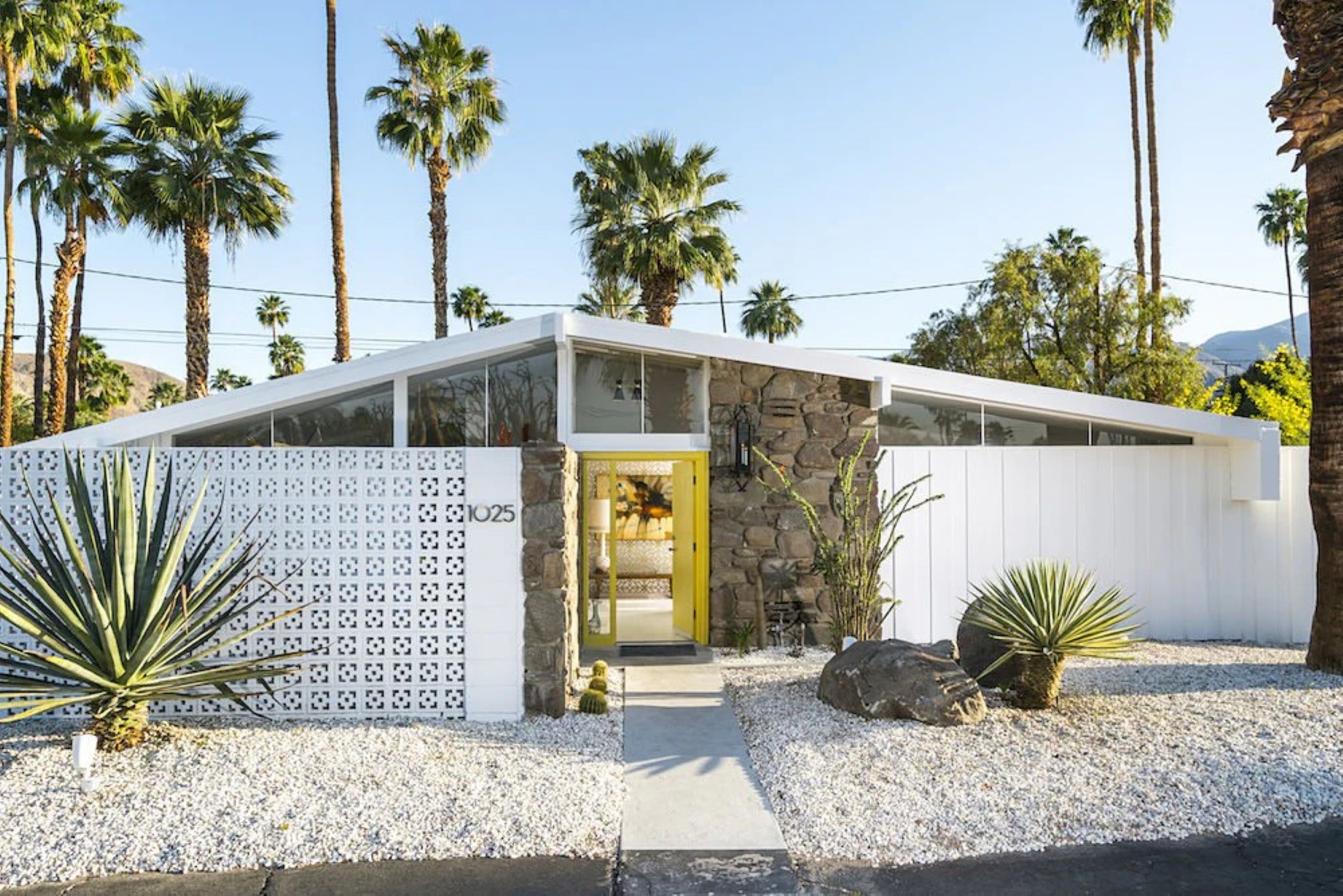
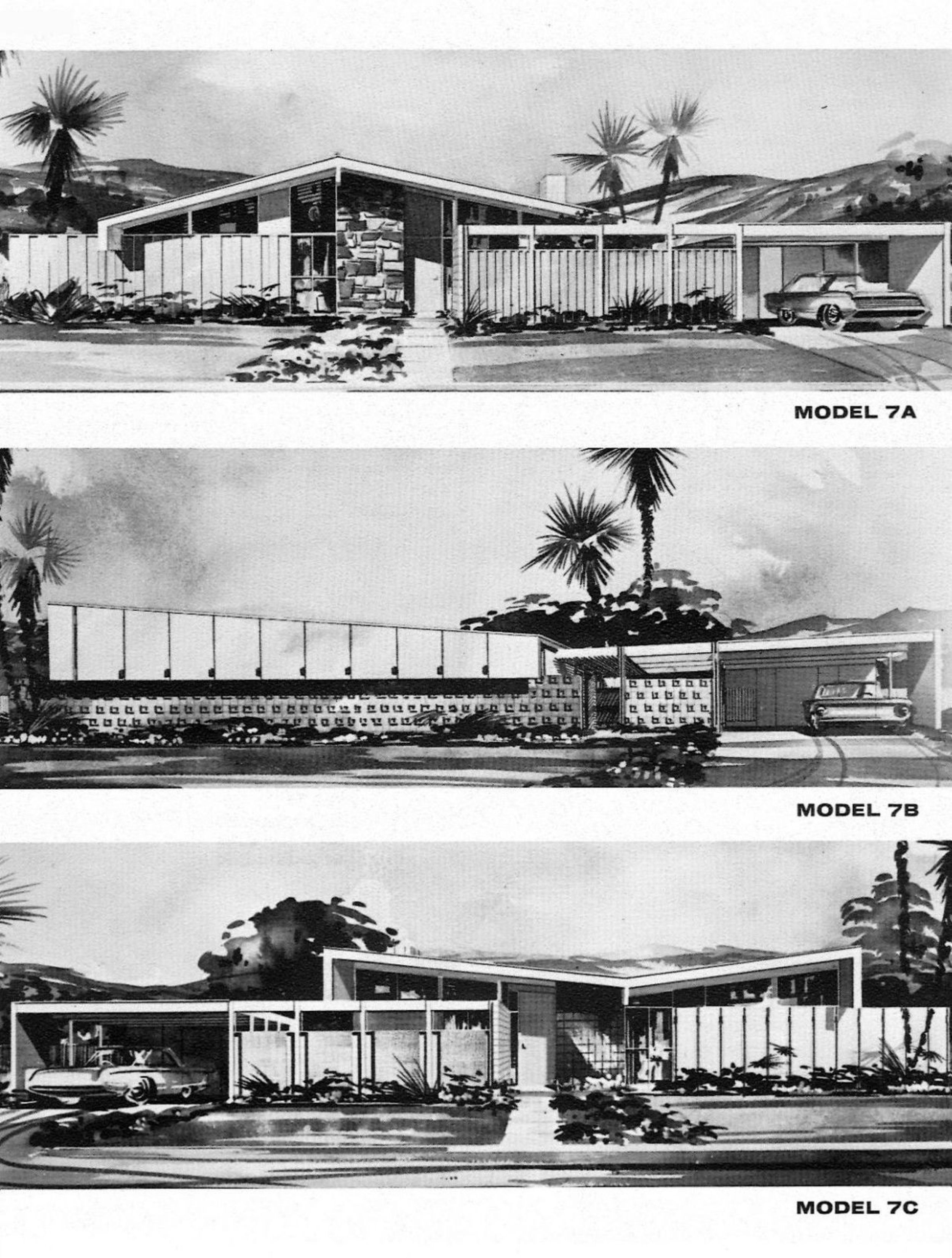
The home pictured above wasn't originally built for the wealthy. It was designed by William Krisel and delivered by Alexander Construction as attainable housing for middle-income families in Palm Springs during the 1950s and 1960s. Today, these homes are celebrated around the world, command significant premiums, and are considered icons of Mid-Century Modern design. Their success reveals an important truth that the housing industry often forgets: affordability doesn't mean cheap. Some of the most valuable and admired homes in America began life as thoughtfully designed housing for ordinary households. The challenge isn't affordability itself, it's how we choose to design for it.
The Real Affordability Crisis Isn't What You Think
Right now, in the United States, households need incomes exceeding $120,000 to purchase a median-priced home. The median household income is approximately $85,000.
That gap isn't simply a pricing problem. It's a design problem.
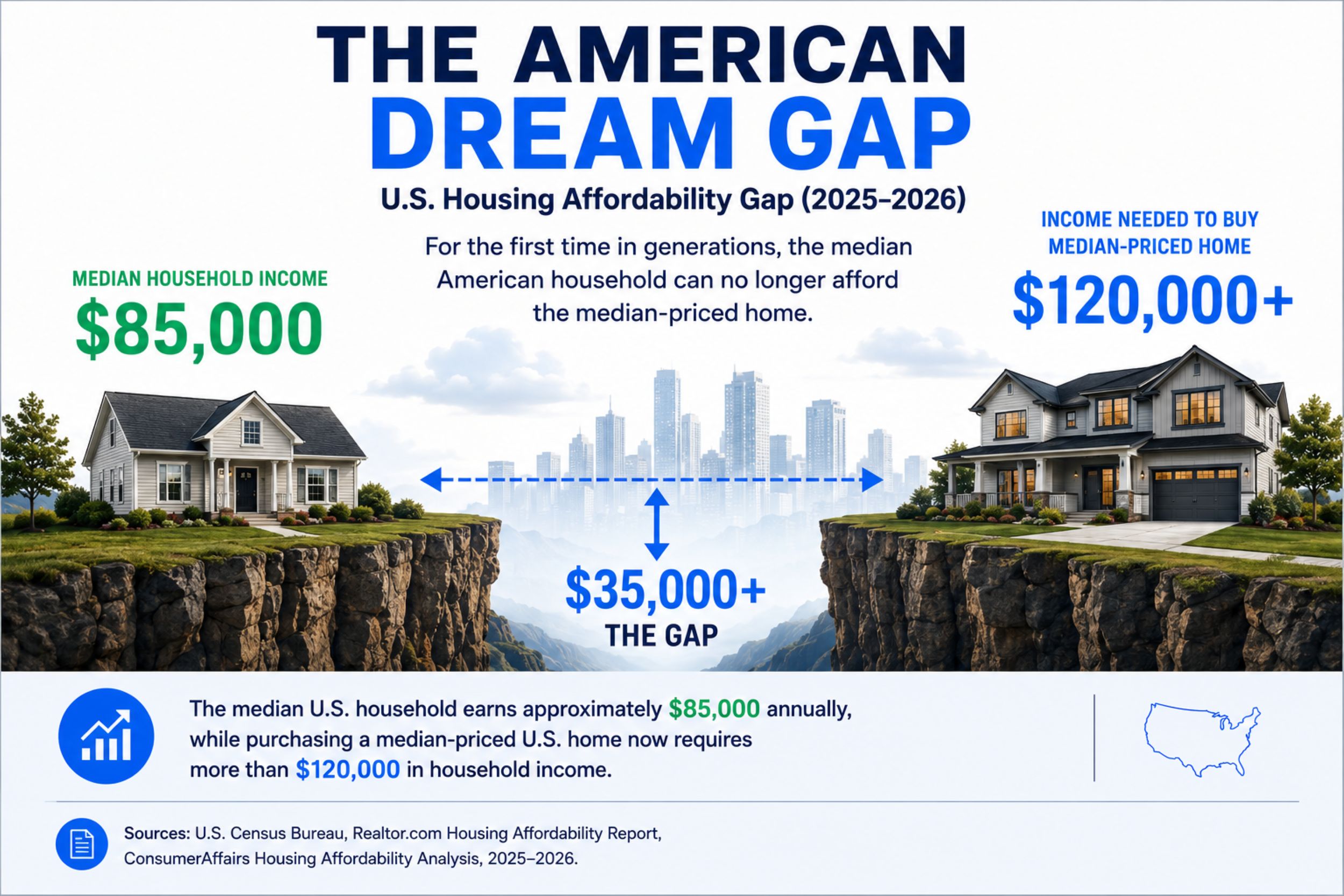
The affordability challenge is fundamentally a gap between incomes and housing costs. Today, the median U.S. household earns approximately $85,000 annually, while purchasing a median-priced home requires more than $120,000 in household income. This growing disconnect is making homeownership increasingly unattainable for many middle-income households.
That matters, because it changes what developers can actually control.
We can't fix wage inequality. We can't change mortgage rates. But we can design communities that create attainability, not just affordability.
Affordability vs. Attainability — The Distinction That Changes Everything
Affordability measures whether a buyer can afford a home at today's prices and interest rates.
Attainability reflects whether the market offers a realistic path to ownership at all.
That path includes available housing types, entry-level price points, and the way communities are designed. While affordability remains constrained by broader economic forces, attainability is becoming a more practical lever for builders, planners, and municipalities.
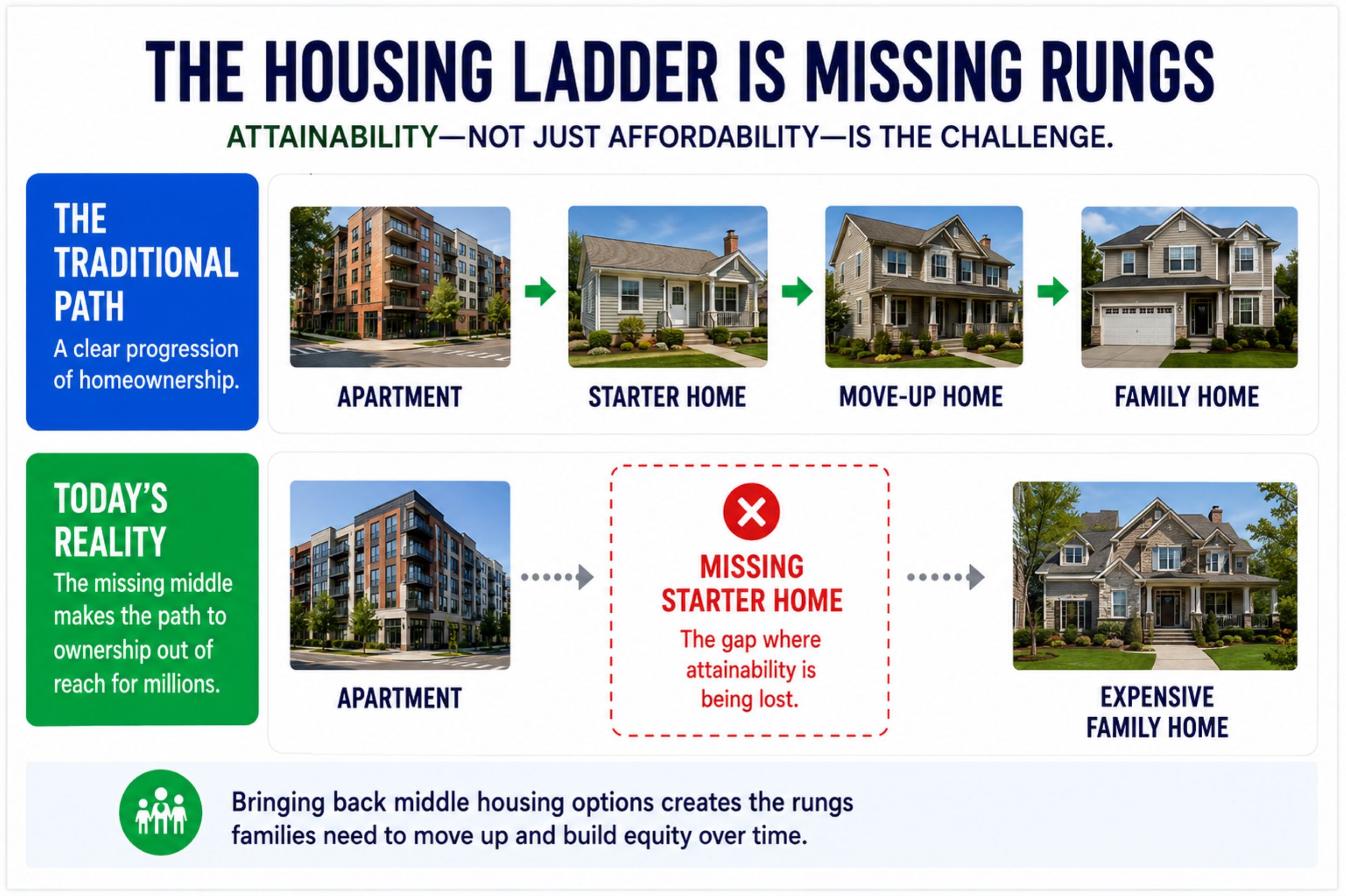
Attainability is the variable we can move.
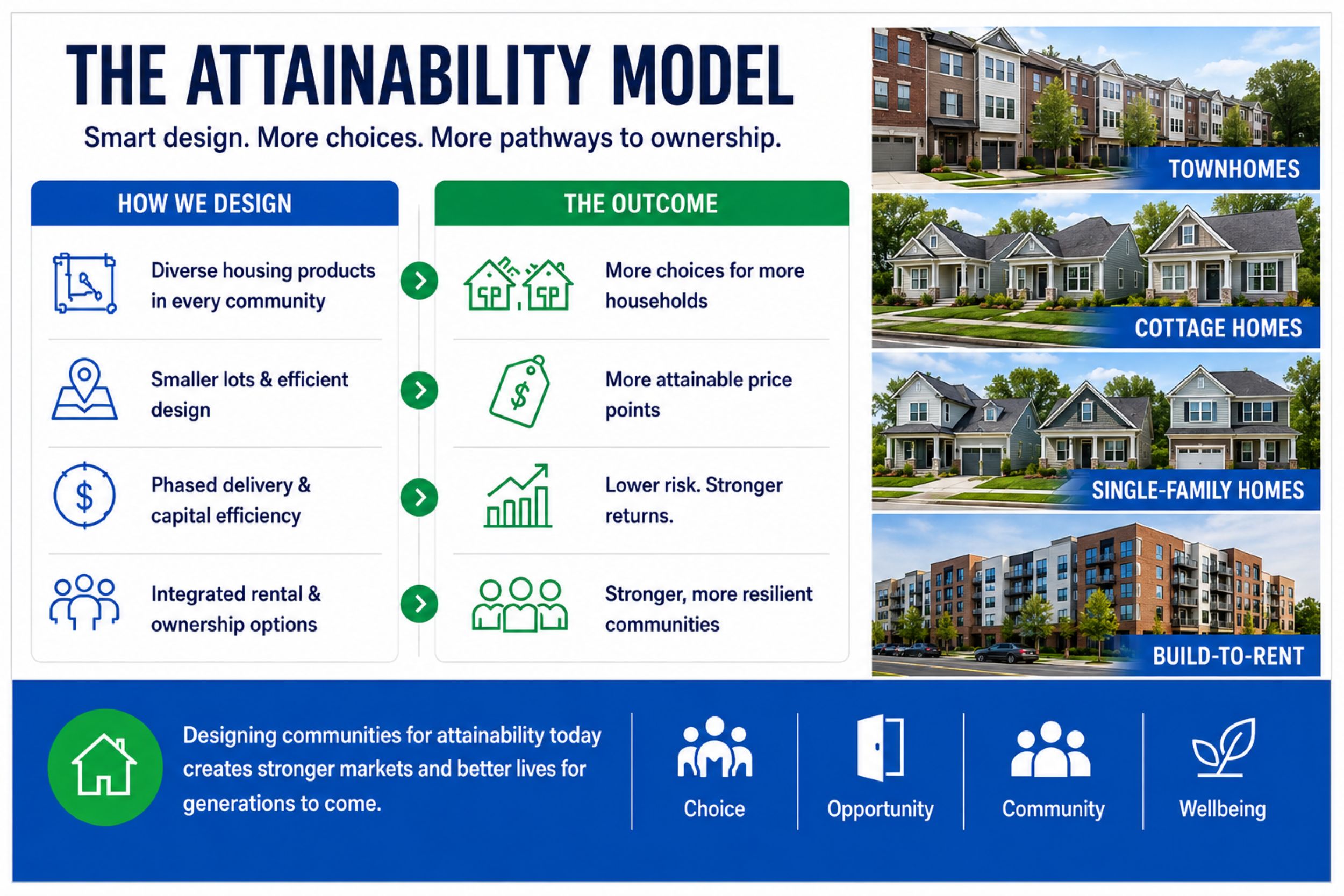
We believe the solution is not simply building more housing, but creating more pathways to ownership across different life stages, household types, and income levels.
That means:
- Mixing housing types within the same community;
- Creating product diversity at different price points;
- Designing smaller lots without sacrificing livability; and
- Delivering missing middle housing that bridges the gap between apartments and detached homes.
This isn't theory. We've implemented these principles across multiple communities.
Design Quality Isn't a Luxury — It's Infrastructure for Wellbeing
Here's where many developers get it wrong.
They assume affordability requires sacrificing quality.
But research consistently shows that reducing quality rarely delivers meaningful cost savings while often creating poorer long-term outcomes. Conversely, thoughtful design, durable materials, and efficient building systems can reduce operating costs, improve resilience, and enhance quality of life.
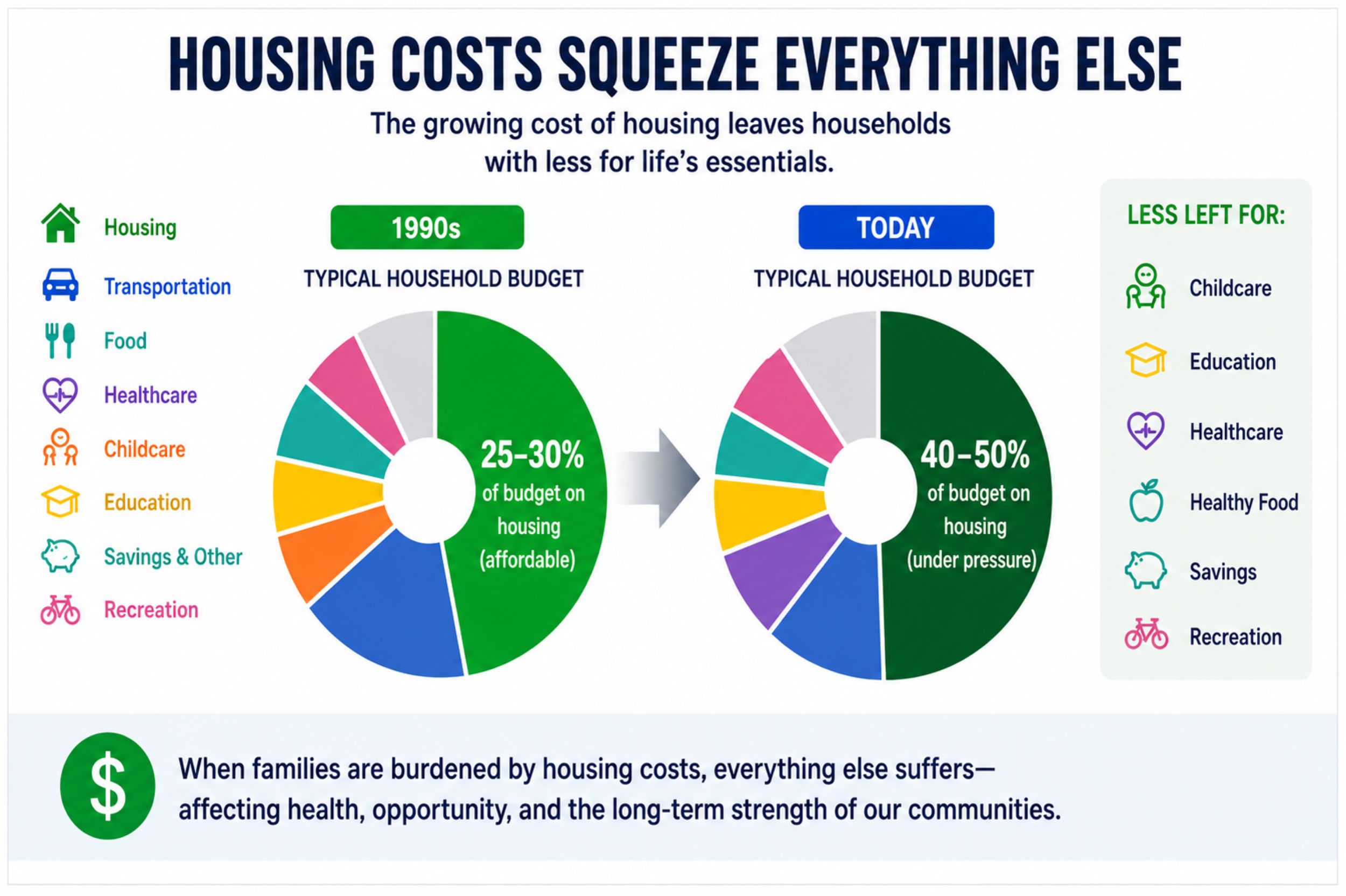
When families aren't burdened solely by housing costs, they can allocate more of their income toward healthy food, childcare, healthcare, education, recreation, and savings.
I've seen the opposite happen as well.
On a large masterplanned community that I worked on in Australia, we partnered with the State Government to deliver an attainable townhome product for first-home buyers and middle-income households. Rather than compromising on quality, we engaged a respected local architect and worked with James Hardie to create homes that combined thoughtful design, efficient construction, and attractive streetscapes.
The result received multiple state and national awards, was embraced by buyers, and evolved into an extensive range of home designs that continue to be delivered today. It demonstrated that affordability and good design are not mutually exclusive, in fact, the most successful attainable housing often achieves both.
Missing Middle Housing — The Market Solution Hiding in Plain Sight
Missing middle housing types are generally more attainable than traditional detached homes. Their smaller size and more efficient land utilization reduce both construction and land costs.
But the real advantage is operational.
Construction can be delivered in smaller phases, allowing completed homes to be occupied sooner and generating earlier returns. This improves project cash flow, reduces upfront capital requirements, and creates more attainable price points for buyers.
Rather than delivering a single housing product at a single price point, successful communities offer a spectrum of housing choices.
That might include:
- Townhomes alongside detached homes;
- Cottage courts mixed with traditional lots; and
- Build-to-rent homes integrated within master-planned communities.
Recent industry surveys show that more than half of builders are reducing lot sizes to improve attainability, while a growing number are incorporating build-to-rent housing into their communities.
The market is moving in this direction because it works.
Case Study: Alexander Construction Company — The Original Missing Middle Success Story
Long before housing affordability became a national concern, Alexander Construction Company was proving that attainable housing and great design could coexist.
Between 1955 and 1965, the company delivered more than 2,200 homes throughout Palm Springs, California, using standardized floor plans, efficient construction methods, and thoughtful architectural design to create homes that middle-income households could afford.
Working with renowned architects Palmer & Krisel, Alexander developed a production housing model that emphasized quality, livability, and distinctive design rather than cost-cutting. Smaller, efficient homes were delivered at attainable prices without sacrificing architectural character or neighborhood appeal.
What were once considered attainable starter homes have since become some of the most sought-after properties in Palm Springs. Many Alexander homes now command substantial premiums and are internationally recognized as icons of Mid-Century Modern design.
The lesson remains highly relevant today: the answer to housing attainability is not lower design standards - it is smarter design, efficient delivery, and housing choices that align with the incomes of the households they serve.
Master-Planned Communities Are Built for This
Master-planned communities possess a structural advantage when it comes to attainability.
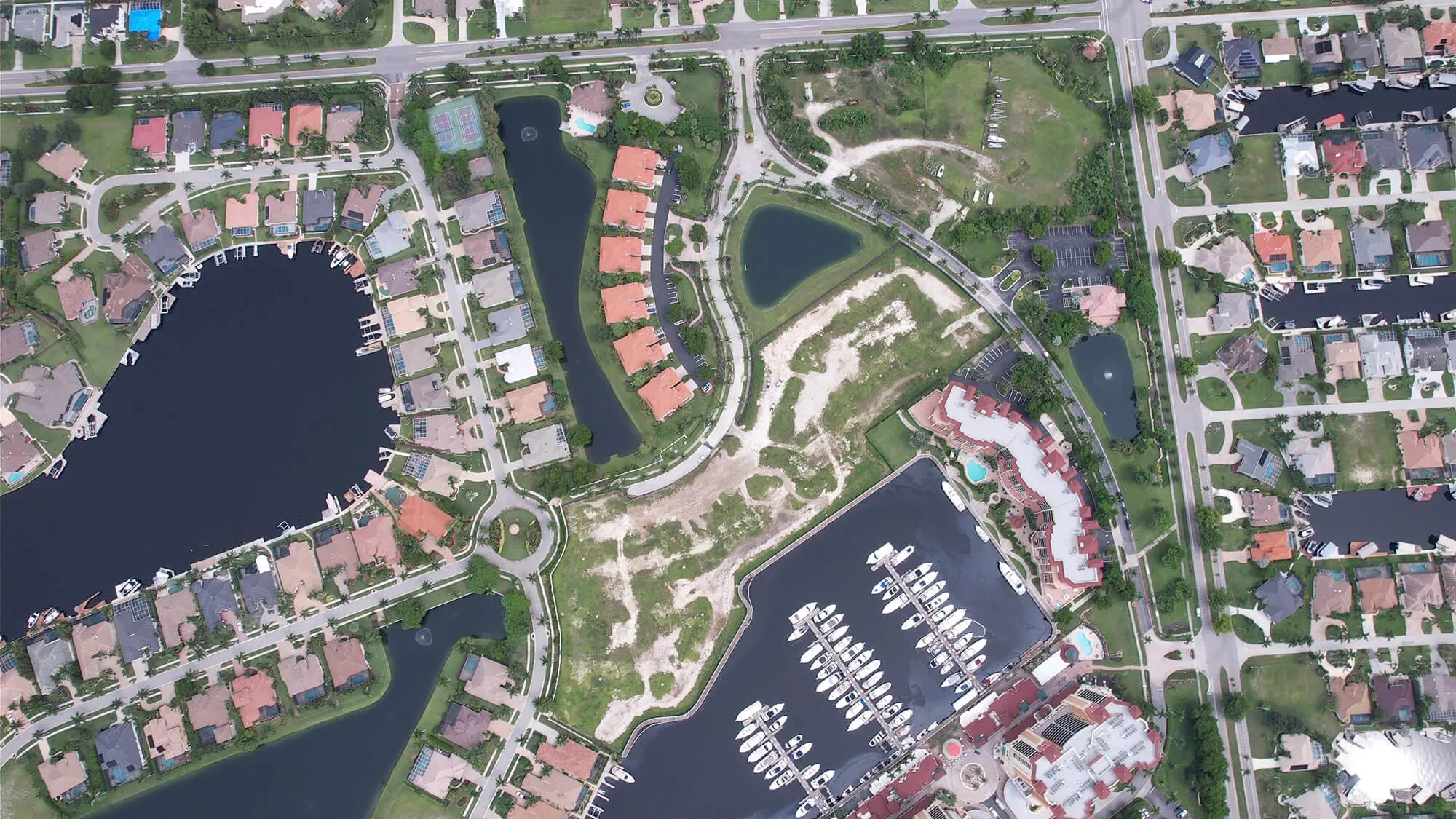
Their diversified product mix allows them to offer a range of housing types, densities, and price points. This diversity creates resilience, enabling communities to respond to changing market conditions without requiring wholesale redesign.
Even during periods of elevated mortgage rates and affordability pressures, many of the nation's leading master-planned communities have continued to outperform broader housing markets.
That resilience comes from decisions made early in the planning process. When diversity is built into the framework of a community, flexibility follows.
When market conditions change, product mix can evolve alongside them.
Wellbeing as Design Infrastructure
Safe, stable, and attainable housing is foundational to health and wellbeing.
Research confirms that housing quality influences physical health, mental wellbeing, social connection, and economic stability. The way homes are designed, and how they connect to the broader community, shapes how people live every day.
The decisions made during planning determine whether residents feel connected or isolated, supported or overlooked.
When executed properly, design can foster a genuine sense of belonging and community pride. This isn't a soft outcome. It's infrastructure.
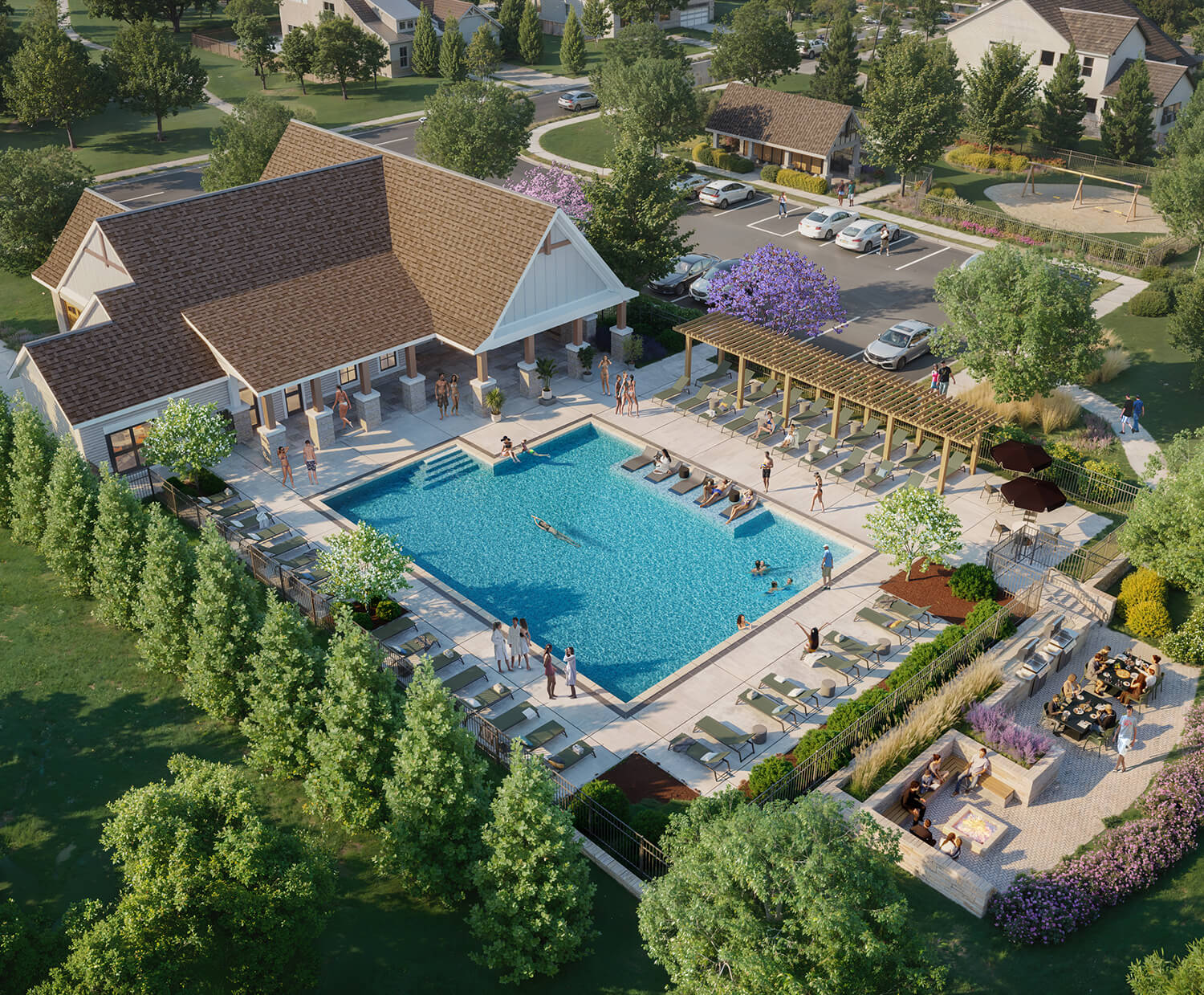
We believe place itself is infrastructure for wellbeing. Communities should make it easier for people to walk, gather, connect, play, and participate in daily life.
That means:
- Walkable connections to schools, parks, and shops;
- Streets designed for people, not just vehicles;
- Public spaces that encourage social interaction; and
- Amenities that strengthen community bonds.
When these elements work together, people don't simply occupy a neighborhood.
They thrive within it.
What Developers Can Do
Developers cannot control interest rates, inflation, or wage growth. But they can control the communities they create.
The most effective strategies are remarkably simple:
1. Design for Diversity
Provide multiple housing types and price points rather than relying on a single product.
2. Focus on Attainability
Create realistic pathways into homeownership through smaller lots, diverse housing products, and entry-level price points.
3. Invest in Design Quality
Deliver value through smarter design, durability, and efficiency, not lower standards.
4. Prioritize Wellbeing
Connect homes to parks, schools, services, and each other.
5. Think Long-Term
Build communities that remain desirable, resilient, and valuable for decades.
When these principles work together, affordability becomes a design outcome rather than a compromise.
The Market Reward for Getting This Right
When you solve for both attainability and quality, you don't just build better communities.
You build better investments.
Communities that offer diverse housing choices and multiple price points are more resilient to market volatility. They attract a broader range of buyers, maintain stronger demand, and create long-term value.
Projects that integrate wellbeing as infrastructure don't just perform financially. They become places where people genuinely want to live.
Capital increasingly flows toward these projects because they represent the future of residential development, not the past.
Related posts
More ideas, stories and innovations from the team at Placewell.
Get in touch
See how we can bring your vision to life.
Our team works with you from day one, shaping a commercially viable vision, verifying key assumptions, and assembling the right experts to turn your ideas into thriving communities.
About us
Meet the experts behind your communities.
Our team combines award-winning expertise, hands-on experience, and a people-first approach to deliver communities that thrive. Get to know the professionals shaping every project from vision to reality.